R.I.S.E. Up To A New Level Of Sleep Wellness
Read article



“Very simply sleeping at night acts like an emotional band aid,” says Hypnos’ resident sleep and wellbeing specialist, Natalie Pennicotte-Collier. “Our brain can process feelings and gain a more resilient perspective on our worries. Science is unveiling the deep connection between our sleep, brain health and mental wellbeing, and in adults and children alike, but worries at night can often disturb or prevent sleep.”
Foster these sleep skills as evidence-based ways to learn to resettle your mind and let the power of sleep do it’s magic!
It may not always feel like it at the time, but gently accept that worries are universal, you can do hard things, and everything normally feels better after a good nights sleep!
Writing down or sharing your worries and struggles does help but try to do this before you go to bed. 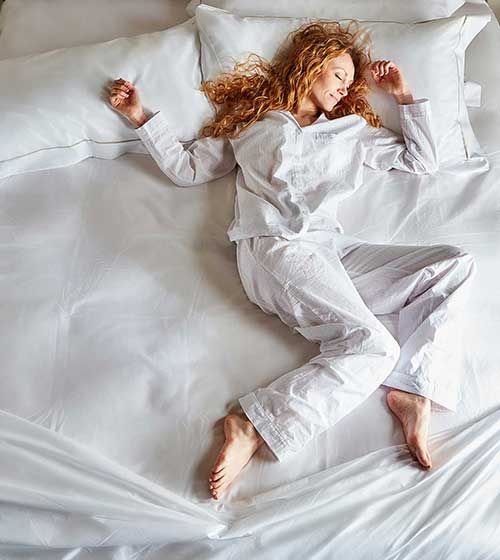 Remember that sleep solves stress better than you can at the end of the day.
Remember that sleep is sensory, so if your ‘inner chat’ feels loud look to sound and tune into a 'relaxation' response of slower deep breathing.
Before you settle into bed place your hands over your heart and stomach to tune into slower deep breathing. Embrace comfort and sensory feel good, imagining that stress is washing away down to your toes which helps the calming part of your physiology take over.
Take a journey to somewhere calming, whether that be by your own visualisation or with the help of a great book or audio. Seek familiarity and pivot the conversation or feelings towards a sunnier time, a positive time or simply a great story!
Seek sensory comfort to enhance feelings of safety with body pillows and blankets, tactile and cosy bedding. Sometimes the right temperature is key with a hot water bottle offering cosy comfort or cool crisp bedding being central to finding calming peace. But try not to stress about light levels and creating a perfect sleep environment, instead, allow a form of gentle distraction through music or white noise, and the warmth of a good nightlight - red light is considered the most sleep-friendly option because it minimally disrupts melatonin production and has the least impact on your circadian rhythm.
**Whilst some of our retailers carry our core ranges, many have ranges exclusive to them.